Maintaining Driveways, Patios and Exterior Surfaces in the Algarve
Outdoor areas are an important part of life in the Algarve. Driveways, patios, terraces and paved garden areas are used throughout the year, but exposure to the elements and everyday activity can gradually affect their appearance.
Dust, dirt, organic deposits and general surface build-up can make outdoor spaces look tired. Regular upkeep helps maintain their appearance, while choosing the right cleaning method helps avoid unnecessary damage.
Why Do Exterior Surfaces Become Dirty?
Outdoor surfaces are exposed to wind, dust, rain, vegetation and frequent use. The amount and type of build-up depend on the surface material, the property's surroundings, shade, drainage and how often the area is used.
Areas beneath trees or close to planting may accumulate leaves and organic matter. Shaded or persistently damp areas may develop deposits that need particular care. Driveways and entrance paths may also collect dirt brought in by vehicles and foot traffic.
Understanding the surface and the type of build-up is the first step towards choosing an appropriate cleaning method.
Identify the Surface Material
Not all exterior surfaces can be cleaned in the same way.
Common materials include concrete, ceramic paving, natural stone, porcelain tiles and other manufactured surfaces. Each may have different requirements depending on its finish, age, condition and installation.
Before cleaning, consider the manufacturer's guidance where available. If the material is unknown, delicate or already damaged, test a small inconspicuous area or seek professional advice before treating the entire surface.
Start With Routine Cleaning
Simple maintenance can make a difference without requiring intensive cleaning.
Depending on the area, useful tasks include:
- Sweeping away loose dirt, leaves and debris.
- Removing weeds where appropriate.
- Keeping drainage channels and accessible outlets clear of loose material.
- Cleaning up spills before they become more difficult to remove.
- Moving outdoor furniture occasionally to check the condition of the surface beneath it.
These tasks help maintain a tidy appearance and make it easier to identify areas that require more attention.
Is Pressure Washing Suitable?
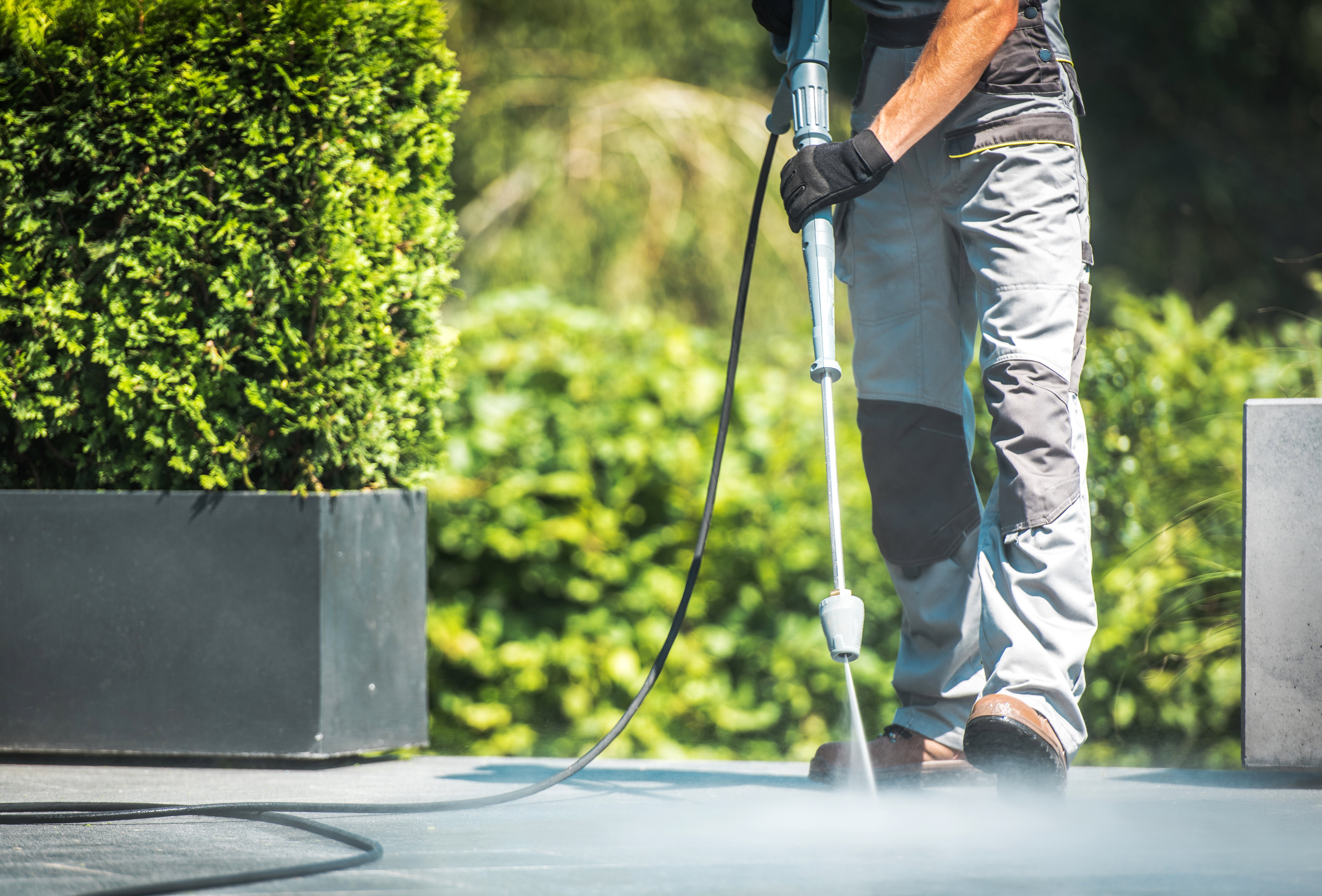
Pressure washing can be effective on suitable exterior surfaces, particularly where ordinary sweeping or gentle cleaning does not remove accumulated dirt.
However, using excessive pressure or an unsuitable nozzle can damage paving joints, coatings, softer stone and other vulnerable materials. Water can also be forced into gaps or areas where it may cause problems.
The right approach depends on the material, the condition of the surface, the type of deposit and the surrounding environment. Some surfaces are better cleaned using lower pressure or another method entirely.
Pay Attention to Drainage and Slippery Areas
Outdoor areas should be checked for standing water, blocked drainage points and surfaces that appear unusually slippery.
Persistent moisture may indicate a drainage or maintenance issue that needs further investigation. Surface deposits can also affect grip, particularly around entrances, steps and pool areas.
Cleaning may improve the condition of a surface, but it does not automatically resolve an underlying drainage problem or guarantee slip resistance. If the issue persists, investigate the cause and choose an appropriate remedy.
Maintain Surfaces Around Swimming Pools
Pool surrounds need particular care because people often walk on them barefoot and the surfaces are regularly exposed to water.
Cleaning methods should be suitable for the specific paving or finish and should not leave residues that create additional hazards. Avoid directing pressure into vulnerable joints, seals or pool equipment.
Where the surface is damaged, loose or persistently slippery, arrange an appropriate assessment rather than relying on cleaning alone.
How Often Should Exterior Surfaces Be Cleaned?
There is no universal schedule. A driveway exposed to vehicle traffic may need attention more often than a sheltered terrace. Areas beneath trees or in shaded locations may also require more frequent cleaning.
Consider the surface's condition, the amount of use it receives and how quickly dirt accumulates. For holiday homes, an inspection before the main season can help identify areas that would benefit from cleaning or other maintenance.
The goal is to maintain the surface appropriately, not to clean it more aggressively or frequently than necessary.
When Should You Arrange Professional Exterior Cleaning?
Professional help may be useful when dirt has accumulated over time, a large area needs cleaning or you are unsure which method is suitable for the material.
An appropriate service should take the surface's condition into account and avoid assuming that maximum pressure will produce the best result.
Exterior cleaning can also be coordinated with other maintenance work, helping property owners organise several tasks during the same visit where practical.
Keep Your Algarve Property's Exterior Looking Its Best
Regular attention to driveways, patios and terraces helps maintain the appearance of outdoor spaces and makes it easier to spot deterioration that may need further attention.
Algarve Maintenance Services provides pressure washing and exterior cleaning for suitable outdoor surfaces across the Central Algarve.
Learn more about our pressure washing and exterior cleaning services, or contact us to discuss the surfaces at your property and the work required.
Cleaning suitability depends on the material and its condition. Specialist assessment may be necessary for damaged, delicate or unfamiliar surfaces.